Egusi Soup
Is there anything that smells more like “home” than Egusi soup bubbling on the stove? Honestly, the second that nutty, savory aroma hits the air, you already know it’s going to be a good day.
Egusi is basically the heavyweight champion of comfort food. Whether you’re pairing it with a mountain of pounded yam or some fresh eba, it’s that one dish that never fails to hit the spot. But if you’ve ever talked to a group of friends about the “right” way to make it, you know the debate gets real!
Everyone has their own secret style. Some people swear by the Caking Method to get those beautiful, soft lumps that almost look like eggs in the soup. Others are team Fried Egusi, where you toast the melon seeds in palm oil first for that deep, smoky flavor. And then there are those who prefer the Boiling Method for a smoother, lighter finish.
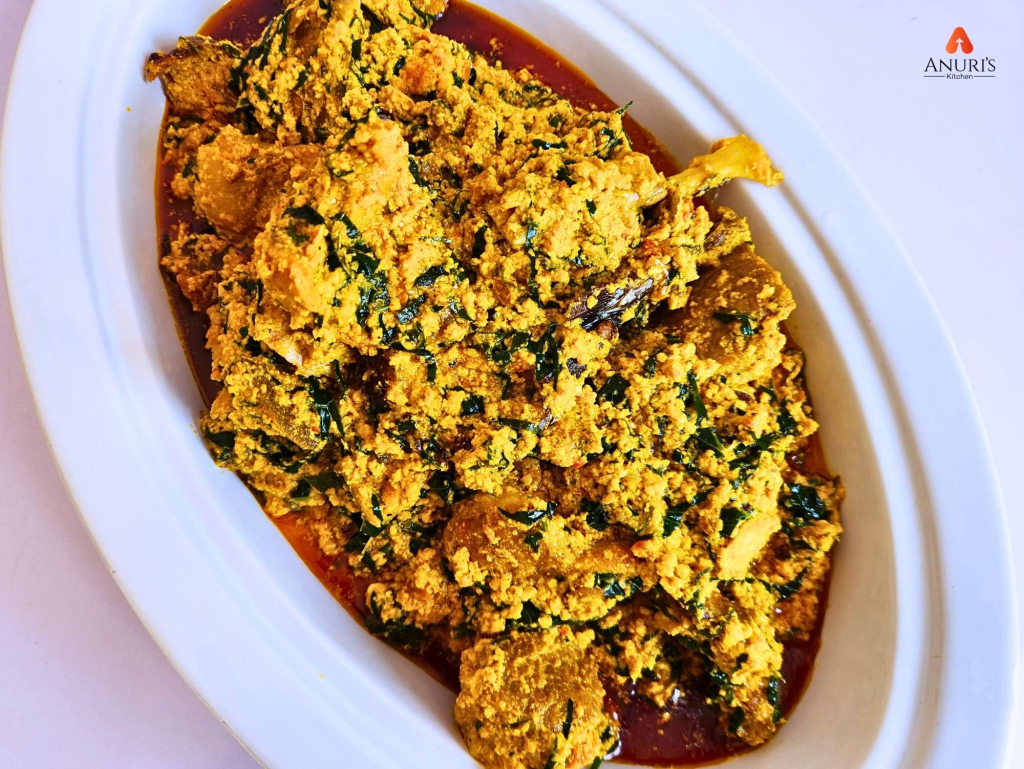
The best part? Egusi is incredibly forgiving. Whether you like yours loaded with bitter leaf, spinning with fresh pumpkin leaves (ugu), or packed with stockfish and shaki, it always finds a way to taste amazing.
You’ll also enjoy: Seafood Okro
If you’ve ever ended up with a soup that was a bit too watery or just lacked that “wow” factor, don’t sweat it. We’re going to walk through it together like we’re hanging out in the kitchen. I’ll show you the little tricks to get that perfect texture and rich taste every single time.
Egusi Soup Ingredients

Dry Egusi (Melon seed, blended): forms the foundation of egusi soup. It gives the soup its thick, creamy, slightly nutty texture. Without egusi, there is no egusi soup.
Ugu Leaf (Pumpkin Leaf): adds freshness, color, and nutrients. It balances the richness of the oil and meats while providing iron and vitamins.
Uziza Leaf: Adds a slightly peppery, aromatic flavor. Unlike ugu, uziza brings warmth and depth to the soup’s aroma.
Beef: provides strong, meaty flavor. When you cook beef with onions and seasoning, it releases stock that enriches the entire egusi soup.
Canda (Cow skin): adds texture. While it does not release much flavor, it gives the soup that chewy, enjoyable bite many people love.
Stockfish: adds deep umami flavor. It has a distinct taste that makes egusi soup more authentic and traditional.
Smoked Fish: contributes smokiness and richness. It strengthens the overall seafood profile of the soup.
Dried Fish: adds concentrated flavor and blends beautifully with crayfish.
Crayfish: enhances the savory depth. It intensifies the taste of egusi soup and connects all the proteins together.
Red Bell Pepper: provides body and mild sweetness. It also gives the soup a vibrant color.
Habanero Pepper: introduces heat. You can adjust the quantity depending on your spice tolerance.
Onions: create a flavor base. They release aroma immediately when added to oil or meat.
Locust Bean (Iru/Dawadawa): adds earthy, traditional depth. It gives egusi soup that authentic Nigerian taste.
Seasoning and Salt: enhance and balance all flavors.
Red Oil (Palm Oil): carries flavor and gives egusi soup its rich color and smooth texture. Palm oil allows the egusi to fry properly and develop taste.
How to To Cook Egusi Soup (Step by step guide)
Step 1: Prepare the meat
First, cook your beef. Add the beef into a pot with chopped onions, seasoning, and a little salt. Then pour water and cook until tender. This step allows the beef to release stock, which you will use later to build flavor in the egusi soup. Strong stock creates stronger egusi soup.
Step 2: Cook the canda and stockfish
Next, cook the canda and stockfish in a separate pot if preferred. Some people choose to do this because canda and stockfish often require longer cooking time and may need extra cleaning to remove sand or strong odors. Cooking them separately allows you to soften and clean them thoroughly before combining with the beef.
However, this step is entirely optional. You can boil all the proteins together without affecting the overall taste. Cooking them separately is simply a personal choice, not a requirement.

Step 3: Mix the ground egusi with water
After that, mix the ground egusi with a small amount of water in a bowl. Stir until you form a thick paste. Do not make it watery. A thick paste helps the egusi fry properly when it enters the oil.
Step 4: Fry the soup base
Then pour red oil into a pot and allow it to heat moderately. Add chopped onions, crayfish, and locust bean. Stir immediately so the flavors release into the oil.
Step 5: Pour in your pepper
Next, add your blended red bell pepper and habanero pepper mix. Stir and allow it to fry for several minutes. Frying removes raw taste and strengthens the base of the soup.
Step 6: Go in with the egusi paste
Now add the egusi paste into the pot. Stir thoroughly until the egusi combines with the oil and pepper mixture. Continue turning it consistently with your spoon.
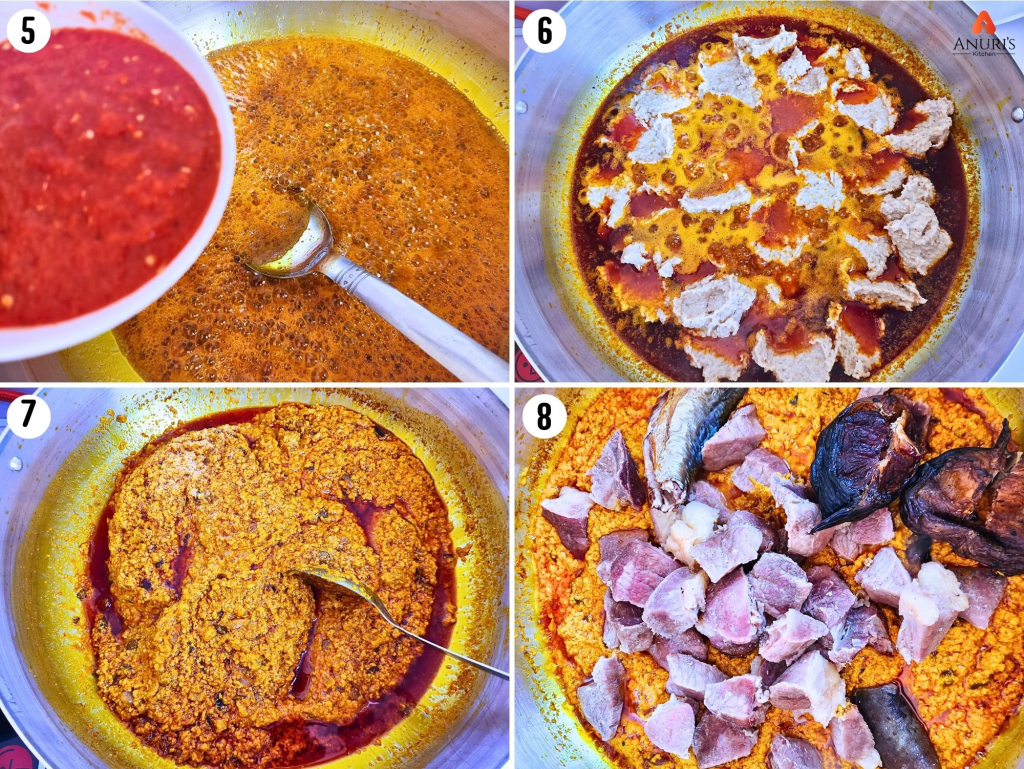
Step 7: Stir and Fry the Egusi Properly
Constantly stir the egusi to prevent burning and ensure it fries evenly. As it continues to cook, you will notice the oil separating slightly from the mixture. This separation indicates that the egusi is properly fried and developing rich flavor.
Step 8: Add the entire stock and fish
After the egusi fries well, add your cooked beef, kpomo, stockfish, smoked fish, and dried fish. Combine everything together carefully. Then add some of the beef stock to reach your desired thickness. Stir and allow it to cook so all flavors blend deeply.
Step 9: Add your chopped leaves
Finally, add your chopped ugu leaf and uziza leaf. Stir immediately and cook for just a few minutes. Do not overcook the vegetables. You want them green, fresh, and vibrant.

Step 10: Serve your soup
Once the soup is well cooked and properly seasoned, turn off the heat and allow it to rest for a few minutes. Then, scoop the soup into serving bowls and serve hot with your preferred swallow such as pounded yam, fufu, or eba. Enjoy while warm for the best taste and texture.
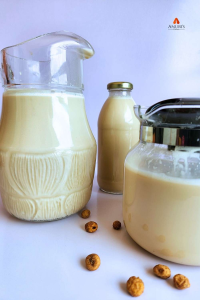
And after a satisfying meal of egusi, a chilled glass of Zobo Drink helps balance the richness beautifully.
How to serve Egusi Soup
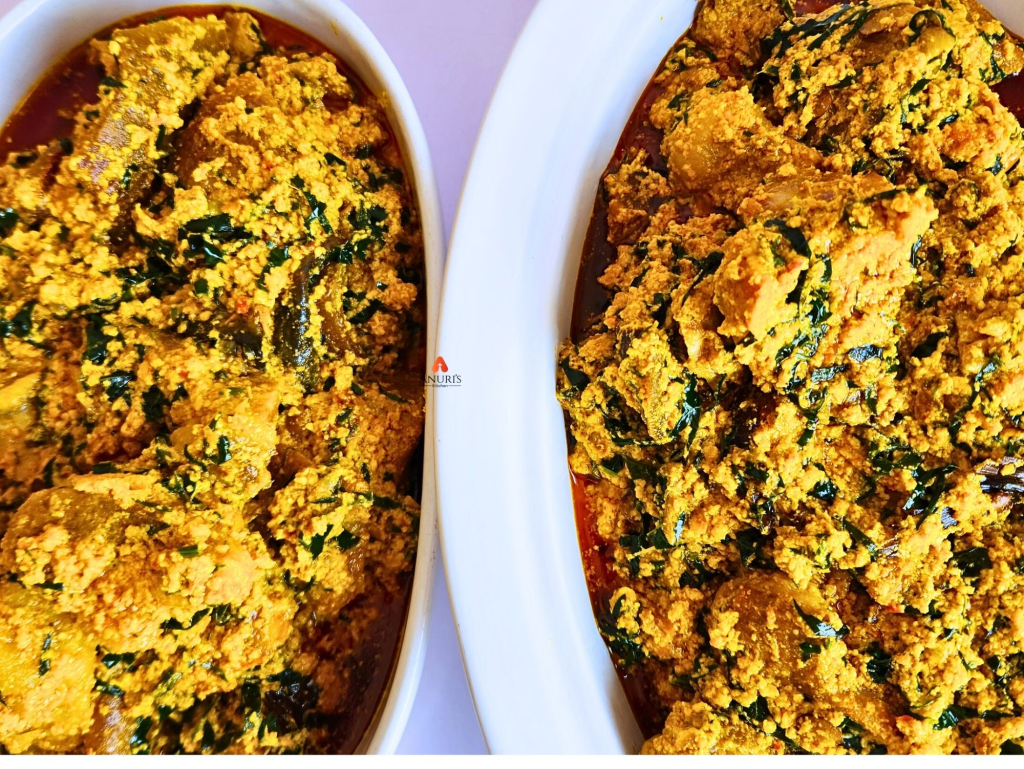
Egusi soup pairs perfectly with pounded yam, eba, semovita, wheat, or fufu. However, you can also eat egusi soup alone. Because egusi soup contains healthy fats and protein, it feels satisfying even without swallow.
Storage Options for Egusi soup
Once heat has been turned off, allow it to cool completely. Then transfer it into airtight containers. Keep it in the refrigerator for up to three days. For longer storage, freeze it in portions for up to one month. Always reheat thoroughly before serving.
Health Benefits of Egusi Soup
Egusi soup offers several health benefits. Egusi seeds contain healthy fats, protein, magnesium, and zinc. Ugu leaf supplies iron and vitamins that support blood health. Uziza leaf aids digestion. Fish and crayfish provide omega-3 fatty acids and protein. When you combine these ingredients, egusi soup becomes a nutrient-dense meal that supports strength and energy.
The soup stands as a timeless Nigerian favorite because egusi soup combines richness, nutrition, and deep flavor in one pot. When you understand each ingredient and follow each step carefully, you create authentic, satisfying egusi soup every single time. Cook it confidently, serve it hot, and enjoy every spoonful.
And if you love rich Nigerian soups, you’ll probably also enjoy seafood favorites like Fisherman Soup or something lighter and broth-based like Goat Meat Pepper Soup.